Cheapest Way to Send Money Abroad in 2027: Fees, Rates and Hidden Costs
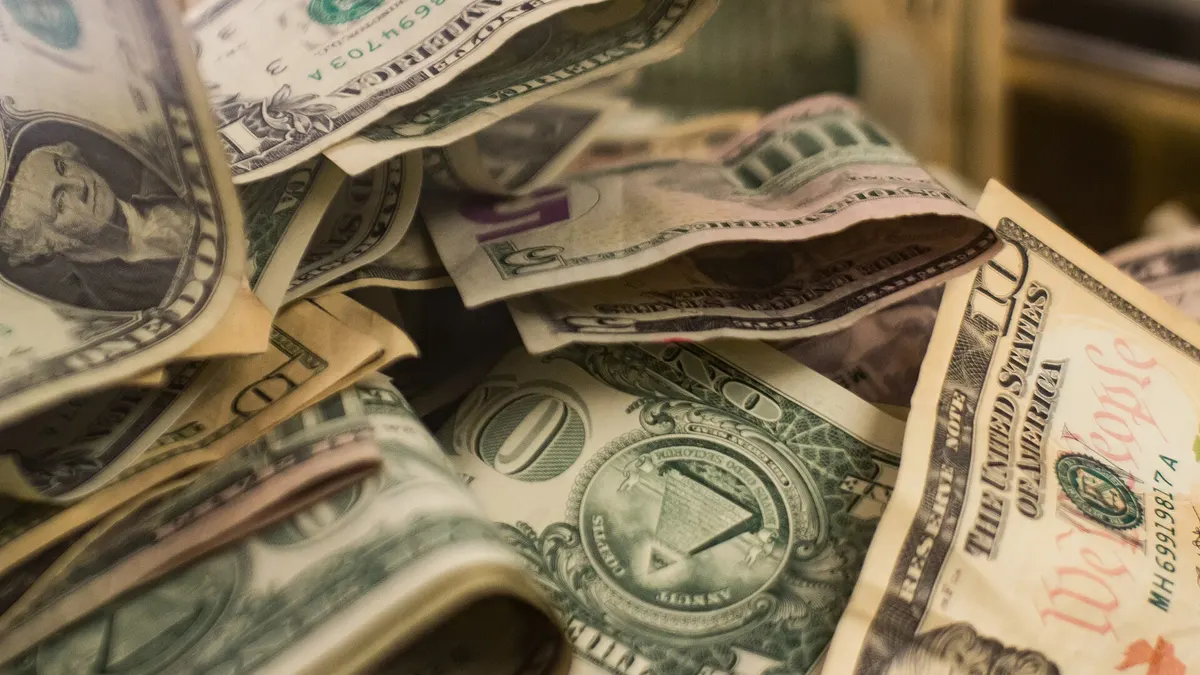
The fee is the part of a money transfer you can see. The exchange rate is the part you can't, and it is usually where most of the cost hides. A provider advertising "zero fees" can still be the most expensive option on the screen.
This guide is for anyone sending money home or abroad regularly: workers supporting family, students paying tuition, people moving savings to a new country. It covers how to compare providers, the new US remittance tax and the busiest corridors to Nigeria, India, the Philippines and Ghana.
The short answer: for most people, the cheapest way to send money abroad is an online transfer service, funded by bank transfer or debit card, paying into a bank account or mobile wallet. Cash, in either direction, almost always costs more.
In this guide
- How exchange-rate markups work
- What sending money really costs
- Bank wire vs money transfer apps vs cash pickup
- The 1% US remittance excise tax
- Know your rights as a sender
- Sending money to Nigeria
- Sending money to India
- Sending money to the Philippines
- Sending money to Ghana
- How to avoid scams and blocked transfers
- Tips for paying less
- Frequently Asked Questions
- Final Thoughts
How exchange-rate markups work
Every currency pair has a mid-market rate: the midpoint between what banks pay to buy and sell that currency on the wholesale market. It is the rate you see on Google or Reuters. Almost no consumer service gives it to you. Instead, they give you a slightly worse rate and keep the difference.
That difference is the markup. It is usually expressed as a percentage and almost never labeled as a fee.
A worked example
Say the mid-market rate is 1 US dollar = 85 Indian rupees, and you send $1,000.
| Provider A | Provider B | Provider C (bank wire) | |
|---|---|---|---|
| Upfront fee | $0 | $5 | $35 |
| Exchange rate offered | 82.50 | 84.60 | 81.00 |
| Markup vs mid-market | About 2.9% | About 0.5% | About 4.7% |
| Amount converted | $1,000 | $995 | $965 |
| Recipient gets | ₹82,500 | ₹84,177 | ₹78,165 |
| Total cost vs mid-market | About $29 | About $10 | About $80 |
Provider A advertises "no fees" and costs nearly three times as much as Provider B. The bank wire, with its fee, poor rate and a possible intermediary bank charge on top, costs the most. These numbers are illustrative, but the pattern is real and repeats across corridors.
The habit to build: look at the final amount in the recipient's currency, and compare that across two or three providers on the same day, for the same amount.
What sending money really costs
The World Bank tracks remittance costs through its Remittance Prices Worldwide database. At the latest data available at the time of writing, the global average cost of sending $200 was a little over 6%, more than double the UN target of 3%. Sending to sub-Saharan Africa was more expensive than the global average, and banks were the most expensive channel by a wide margin, averaging close to 15% for a $200 transfer.
The best online services in competitive corridors are often well under 2% all-in. That gap is your saving.
Small transfers suffer most because fixed fees eat a larger share. Sending $100 four times a month can cost far more than sending $400 once.
Bank wire vs money transfer apps vs cash pickup
| Method | Typical all-in cost | Speed | Best for |
|---|---|---|---|
| Bank wire (SWIFT) | High: fixed fee plus a 2–5% rate markup, sometimes intermediary fees | 1–5 business days | Large sums where your bank offers a negotiated rate, or when the receiving side demands a wire |
| Online transfer service (bank-funded) | Low: often under 1–2% in competitive corridors | Minutes to 2 days | Regular transfers to bank accounts and mobile wallets |
| Online transfer service (card-funded) | Low to medium: card fees add cost | Often minutes | Speed when the bank route is slow |
| Cash pickup agent | Medium to high: fees plus wider markups | Minutes | Recipients without bank accounts or wallets |
| Mobile wallet payout | Low to medium | Minutes | Philippines, Ghana, Kenya and other wallet-heavy markets |
| Cash-funded transfer in the US | Medium to high, plus 1% federal excise tax since 2026 | Minutes | Senders without a bank account |
A few practical points.
Banks are not always bad. For large amounts, a private-banking desk or a bank with a dedicated FX service can match online providers. Ask for the rate in writing before you agree. For ordinary customers sending under a few thousand dollars, banks rarely compete.
Card funding is convenient but check the details. Credit card transfers may be treated as a cash advance by your card issuer, with fees and interest from day one.
Cash pickup is valuable for families without bank access, but the convenience costs money. If the recipient can open a bank account or mobile wallet, the savings over a year can be substantial.
The 1% US remittance excise tax
From January 1, 2026, the US imposes a 1% federal excise tax on certain remittance transfers sent from the United States. It was created by the 2025 tax law commonly called the One Big Beautiful Bill Act and sits in Section 4475 of the Internal Revenue Code.
The tax applies to transfers where the sender pays with cash, a money order, a cashier's check or a similar physical instrument. Transfers funded from an account at a US bank or other regulated financial institution, or paid with a US-issued debit or credit card, are exempt. The provider collects the tax from you at the counter and pays it to the IRS.
On a $500 cash transfer, that is $5 on top of whatever the provider charges. The practical response for most people is simple: open a US bank account and fund transfers from it. If you need help with that, our guide on how to build a credit score in the USA as an immigrant covers opening your first accounts. Treasury and the IRS have been issuing guidance on the details through 2026, so check irs.gov if you send cash regularly.
The tax is on the sender. It does not apply to transfers from other countries, and it is separate from US gift tax rules. For 2026, you can give up to $19,000 to any one person without filing a gift tax return; above that you file a return, though tax is rarely due.
Know your rights as a sender
In the US, the Consumer Financial Protection Bureau's remittance rule gives you protections on most international transfers. Before you pay, the provider must show the exchange rate, fees and the amount the recipient will get. You generally have at least 30 minutes after paying to cancel for a full refund, and you can report errors within 180 days. The CFPB's money transfer pages explain the details.
Other countries have their own transparency rules. Either way, keep the receipt or the confirmation email until the money has arrived.
Sending money to Nigeria
Since May 1, 2026, the Central Bank of Nigeria has required licensed money transfer operators to pay remittances out in naira rather than in US dollars. In practice, your recipient receives naira into a bank account or wallet, or as cash pickup, converted at the operator's rate on the day.
That puts the exchange rate front and center. Compare what each provider offers per dollar or pound against the official rate published by the CBN, and look at the final naira amount. Rates can move quickly, so check on the day you send.
Use only operators licensed by the CBN, and avoid informal "black market" arrangements, whatever rate they promise. If something goes wrong, there is no one to complain to.
Sending money to India
India is one of the most competitive corridors in the world, with dozens of online providers paying into bank accounts, often within minutes through India's domestic payment rails. For Indians living abroad, sending into an NRE (non-resident external) account keeps the money freely repatriable later; an NRO account is for income earned in India.
Money received from relatives abroad is generally not taxable in India for the recipient. Large or regular transfers to non-relatives can be, so if you are sending outside the family, check with a tax adviser in India.
Sending money to the Philippines
The Philippines has some of the widest choice of payout options: bank deposit, mobile wallets such as GCash and Maya, door-to-door delivery and cash pickup at pawnshops and remittance centers. Wallet and bank payouts are usually cheaper than cash pickup.
Watch the peso rate more than the fee. Many providers offer low or zero fees on this corridor and compete on rate instead.
Sending money to Ghana
Ghana is a mobile-money market. A large share of recipients, particularly outside Accra, prefer to receive into a mobile wallet rather than a bank account. Since early 2026, the Bank of Ghana has tightened its rules for money transfer operators, including requiring remittances to be settled in cedis through Ghanaian banks. As with Nigeria, that makes the exchange rate the number to compare.
Check that your provider is working with a BoG-registered operator. Several remittance partners have been suspended in recent years for breaching the rules, which can delay payouts.
How to avoid scams and blocked transfers
Money transfer services are a favorite tool of scammers because a completed transfer is usually impossible to reverse. These are the patterns to refuse.
- Anyone you have not met in person asking you to send money, especially for a job, a visa, a loan, an inheritance or a romance
- A "recruiter" asking you to pay a visa processing fee by transfer to a personal account; our guide to fake overseas job offers covers this in detail
- Requests to pay in gift cards or cryptocurrency
- Someone posing as a government agency, immigration office or tax authority demanding urgent payment
- Being asked to receive money and forward it, which can make you part of a money-laundering chain
Expect your provider to ask questions on larger transfers: the source of funds, the purpose and the relationship with the recipient. This is normal anti-money-laundering practice. Answer honestly. Splitting transfers to stay under reporting limits is called structuring and is illegal in the US and many other countries.
If you have been scammed in the US, report it to the provider immediately and to the FTC at ReportFraud.ftc.gov. Elsewhere, report to your provider, your bank and the national fraud reporting service.
Tips for paying less
- Fund transfers from a bank account rather than a card or cash
- Send larger amounts less often, if your family's budget allows
- Use a provider with a rate alert or a "lock rate" feature when your corridor is volatile
- Hold multi-currency balances if you are paid in one currency and spend in another
- Avoid weekend transfers on services that widen their markup when markets are closed
- Check the receiving fee: some banks charge to receive an international wire
If you are moving abroad permanently, set up your transfer service before you leave. Our moving abroad checklist covers when to do it.
Frequently Asked Questions
What is the cheapest way to send money abroad?
For most corridors, an online money transfer service funded by bank transfer and paid into a bank account or mobile wallet. Compare the amount received on the same day across two or three providers, because the cheapest one changes by corridor and amount.
Does the 1% US remittance tax apply to transfers from my bank account?
No. The tax applies only to transfers funded with cash, money orders, cashier's checks or similar physical instruments. Transfers funded from a US bank account or a US-issued debit or credit card are exempt.
Are bank wires safer than money transfer apps?
Not necessarily. Licensed transfer services are regulated in the US, UK, EU and other markets and must follow the same anti-money-laundering rules. What matters is that the provider is licensed where you send from and has a partner licensed where the money lands.
Why did my transfer get held?
Providers hold transfers for identity checks, unusual amounts, sanctions screening or suspected fraud. Respond quickly to any document request. If the hold lasts more than a few business days, ask the provider for a written explanation and a reference number.
Can I send US dollars to Nigeria and have them paid out in dollars?
Not through licensed money transfer operators since the CBN's naira-only payout rule took effect on May 1, 2026. Recipients receive naira. Check with your provider and recipient's bank for any options to fund domiciliary accounts by other routes, and do not use unlicensed dealers.
Final Thoughts
Pick two or three licensed providers that serve your corridor and compare them once a month for a typical amount. Look only at what your recipient receives. You will usually find that one is consistently cheaper for your route, and the others are useful backups when a transfer gets held.
If you are in the US and still paying cash at the counter, the 1% excise tax is one more reason to open a bank account and move transfers online. It is a small cost on its own, but it sits on top of the higher fees and wider markups that cash services already charge.
This guide is general information based on official sources at the time of writing, not legal or financial advice. Immigration rules, fees and processing times change often, so check the official government website or speak to a licensed immigration adviser before you apply. Spotted something out of date? Tell us.