Live and Work in Toronto in 2027: Jobs, Salaries, Housing and Moving Guide
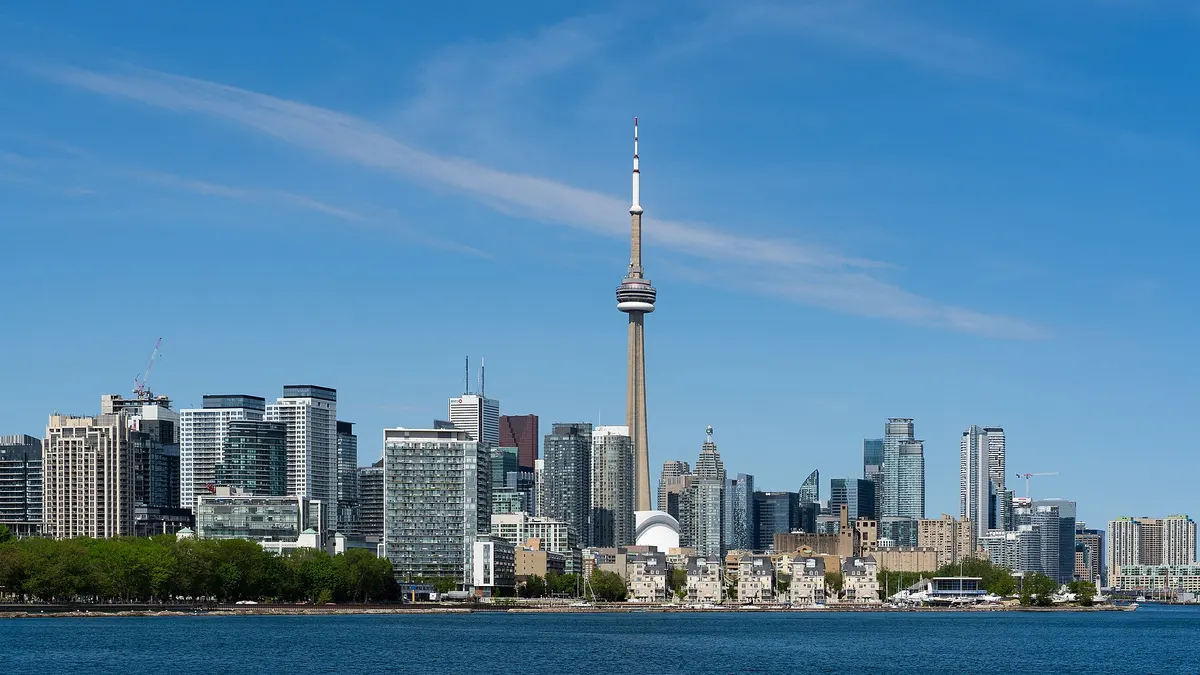
Toronto is still where most newcomers to Canada aim first. It has the country's biggest job market, the largest immigrant communities and a fair chance that someone from your hometown already lives in Scarborough or Brampton and can tell you which landlord to avoid.
It is also expensive, the job market is softer than it was a few years ago, and Ottawa spent 2025 and 2026 cutting the number of temporary residents it lets in. That doesn't make Toronto a bad choice. It means you should arrive with a plan, savings and realistic salary expectations.
This guide covers what jobs pay, what rent really costs, how to get a work permit, and the money admin of your first months: bank account, credit score, health cover and insurance.
The honest answer: Toronto works well if you arrive with permanent residence or a job offer and three to six months of savings. It is hard if you arrive on a visitor visa hoping to find sponsorship once you land.
In this guide
- Why People Still Choose Toronto
- Jobs and Salaries in Toronto
- Do You Need a Work Permit?
- The 2025–2026 Immigration Changes That Affect You
- Cost of Living in Toronto
- Renting in Toronto
- Buying Property and Getting a Mortgage
- Opening a Bank Account
- Building a Canadian Credit Score
- Healthcare: OHIP and Private Insurance
- Car Insurance, Driving and the TTC
- Families, Schools and Newcomer Support
- Frequently Asked Questions
- Final Thoughts
Why People Still Choose Toronto
The case for Toronto is range. Finance, tech, healthcare, construction, logistics, film and government all employ people at scale, so if one sector stalls you are not stuck. Bay Street banks, hospital networks like UHN and Sunnybrook, and the warehouses around Pearson airport hire even in slow years.
The second reason is community. Close to half of the City of Toronto's residents were born outside Canada, so your food, your church or mosque, and someone who knows a good accountant are easy to find. That network matters when you are hunting for your first Canadian job.
The trade-off is cost and competition. Entry-level office jobs get hundreds of applicants, and plenty of people start here and move to Calgary, Ottawa or a smaller Ontario city within a few years.
Jobs and Salaries in Toronto
These are Job Bank median hourly wages for the Toronto region (Statistics Canada data, updated November 2025), with a rough annual figure at 37.5 hours a week. They are approximate, in Canadian dollars, before tax. Newcomers without Canadian experience often start below the median.
| Occupation | Median hourly (CAD) | Rough annual (CAD) |
|---|---|---|
| Software developer / programmer | $48.08 | $94,000 |
| Accountant | $41.34 | $81,000 |
| Registered nurse | $40.59 | $79,000 |
| Electrician (construction) | $34.86 | $68,000 |
| Truck driver (AZ / Class 1) | $25.10 | $49,000 |
| Personal support worker / nurse aide | $23.00 | $45,000 |
| Early childhood educator | $22.00 | $43,000 |
| Cook | $18.00 | $35,000 |
| Minimum wage (general) | $17.95 | $35,000 |
Check any job on the Job Bank wage tool, which also rates the local outlook.
Two things the table hides. Regulated jobs (nursing, engineering, electrical work, teaching, accounting designations) need Ontario licensing first, which can take months. And tech has cooled: Job Bank currently rates prospects for software developers in Toronto as limited. Healthcare, skilled trades and transport are steadier. Nurses should budget several months for registration with the College of Nurses of Ontario.
Do You Need a Work Permit?
Yes, unless you are a citizen or permanent resident. The main routes:
- Employer-specific permit with an LMIA. Since 2024, low-wage LMIAs are refused in cities with unemployment of 6% or higher, and Toronto is on that list. Sponsorship in Toronto now mostly means jobs paying at least $36.92 an hour, Ontario's high-wage threshold since July 2026. Our guide to visa sponsorship jobs in Canada explains the rules.
- LMIA-exempt permits, such as intra-company transfers, CUSMA professionals and International Experience Canada.
- Post-graduation work permit after an eligible Canadian program.
- Permanent residence first, through Express Entry or the Ontario PNP. This is the strongest way to arrive because you can take any job.
Never pay anyone for a job offer or an LMIA. Employers cannot legally recover the LMIA fee from you, and paid "LMIA jobs" are among the most common scams aimed at applicants from Africa and South Asia.
The 2025–2026 Immigration Changes That Affect You
The 2026–2028 Immigration Levels Plan holds permanent resident admissions at 380,000 a year, down from 395,000 in 2025. The bigger cut is temporary: the 2026 target for new temporary residents is 385,000 (about 230,000 workers and 155,000 students), and Ottawa wants temporary residents below 5% of the population by the end of 2027. The official levels plan briefing has the details.
Other changes newcomers keep running into:
- Visitors can no longer apply for a work permit from inside Canada.
- Spousal open work permits are limited to spouses of workers in higher-skilled jobs or certain programs.
- Study permits are capped, and most college graduates' work permits now depend on field of study.
- From 3 November 2026, IRCC is changing how Express Entry awards points for Canadian experience and job offers, and dropping the LMIA requirement for job offers.
- Budget 2025 announced a one-time route to move up to 33,000 work permit holders to permanent residence over 2026 and 2027.
The direction is clear. If you are outside Canada, a PR application or a high-wage job offer beats hoping to switch status after arrival.
Cost of Living in Toronto
Approximate late-2026 monthly costs in Canadian dollars for renting in the city. Your numbers will vary with neighbourhood and habits.
| Monthly cost (CAD) | Single person | Family of four |
|---|---|---|
| Rent (1-bed vs 2-bed) | $1,950–$2,100 | $2,800–$3,200 |
| Utilities and internet | $120–$200 | $200–$320 |
| Mobile phone | $40–$70 | $120–$200 |
| Groceries | $450–$550 | $1,200–$1,500 |
| Transit (TTC) | about $155 | $310–$450 |
| Tenant insurance | $25–$35 | $35–$50 |
| Child care (one child under 6, licensed) | n/a | $450–$500 |
| Clothes, eating out, other | $250–$400 | $500–$800 |
| Approximate total | $3,000–$3,500 | $5,600–$7,000 |
A single person on $60,000 takes home roughly $3,800 a month, so the budget works with little left to save. One $80,000 salary for a family of four is tight. Licensed child care for under-sixes is capped at $22 a day in Ontario, but spaces are scarce and waitlists long.
Renting in Toronto
Rents have fallen since 2024. Listings site liv.rent put the City of Toronto average for an unfurnished one-bedroom at $1,969 in October 2026, down 3.7% on a year earlier. Downtown runs about $2,080 for a one-bedroom and $2,825 for a two-bedroom, unfurnished. Mississauga and Brampton are a little cheaper, with longer commutes.
Landlords will ask for ID, proof of income (job letter or pay stubs) and a credit report. Without Canadian credit, offer a reference from a previous landlord, a bank statement or an employer letter. In Ontario the deposit is limited to first and last month's rent, and most tenancies must use the Ontario Standard Lease.
Scams are rife on Facebook Marketplace and Kijiji. Never send money for a unit you have not seen in person or on live video with someone you have verified is the owner. A downtown one-bedroom at $1,200 is fake.
Buying Property and Getting a Mortgage
The Toronto Regional Real Estate Board reported a GTA average selling price of about $1,006,000 in September 2026, with City of Toronto condos averaging about $640,000, both down on 2025.
Permanent residents can buy like anyone else, and first-time buyers get 30-year amortizations on insured mortgages and land transfer tax rebates. Work permit holders can buy one home under the federal foreign buyer ban (in force until 1 January 2027 at the time of writing) if their permit has at least 183 days left, but Ontario's 25% Non-Resident Speculation Tax still applies to foreign nationals unless an exemption fits. Read our guide to buying a home in Canada as a newcomer before you talk to a lender.
Opening a Bank Account
You need your passport and immigration document (PR confirmation, work permit or study permit). RBC, TD, Scotiabank, BMO and CIBC all have newcomer packages that waive monthly fees for a period and offer a credit card without Canadian credit history, and several let you start before you land.
Do it in your first week, because payroll and rent both need a Canadian account. Our guide to opening a bank account in Canada compares the packages.
Building a Canadian Credit Score
Your credit history from home does not transfer. Canada's two bureaus, Equifax and TransUnion, score from 300 to 900, and you start with a thin file. Start building straight away:
- Get your bank's newcomer credit card, even with a small limit.
- Put one or two regular bills on it and pay the full balance every month.
- Keep the balance under about 30% of the limit.
- Put your phone plan in your own name and pay on time.
- Check both bureau reports for free once a year.
After 6 to 12 months of on-time payments most people have a usable score, which affects your next lease, your car insurance and your mortgage rate.
Healthcare: OHIP and Private Insurance
The old three-month OHIP wait is gone. Ontario's official page says there is no longer a waiting period, so eligible people are covered once they register. Permanent residents qualify, as do work permit holders working full-time for an Ontario employer for at least six months, plus their spouses and dependants. You apply in person at ServiceOntario with original proof of status, Ontario residence and identity. See the Ontario OHIP page.
Visitors, most international students and workers on short or part-time permits are not covered. Even with OHIP, prescriptions, dental and eye care aren't included for most adults, so rely on employer benefits or private cover, and buy short-term newcomer insurance for the gap between landing and getting your card.
Car Insurance, Driving and the TTC
You do not need a car in central Toronto. The TTC charges $3.30 a ride on PRESTO, debit or credit, and since September 2026 fare capping makes trips free after 47 paid fares in a calendar month, so a daily commuter pays about $155.
You can drive on a foreign licence for 60 days. Licences from a short list of countries (including the UK, Ireland, Australia, Japan, South Korea, Germany and France) can be exchanged. Most others, including Nigerian, Indian and Filipino licences, cannot, and since 1 July 2026 those drivers get credit for at most one year of foreign experience, so expect to pass both the G2 and G road tests.
Insurance is the shock. Ontario premiums average more than $2,100 a year, and GTA postal codes and new drivers pay much more. Ontario also made income replacement and several other accident benefits optional on 1 July 2026. Our guide to car insurance in Canada for newcomers shows how to pay less.
Families, Schools and Newcomer Support
Public school is free for children of permanent residents and generally for children of work permit holders. Enrolment with the Toronto District School Board or the Toronto Catholic District School Board depends on your address, so check the school boundary before you sign a lease.
Permanent residents, and temporary residents after 18 months in Canada with valid status, may qualify for the tax-free Canada Child Benefit. You must file Canadian tax returns to receive it, so file every year, including your first partial year.
Free, government-funded settlement agencies help with job search, résumés, language classes and credential recognition, mainly for permanent residents. For immigration advice, use a lawyer licensed by the Law Society of Ontario or a consultant registered with the College of Immigration and Citizenship Consultants, and check the register yourself before paying.
Frequently Asked Questions
How much money do I need to move to Toronto?
Plan for three months of expenses plus setup costs. For a single person that is roughly $10,000 to $14,000, covering first and last month's rent, furniture, transit and food while you job hunt. Families should aim for $20,000 or more.
Is it easy to find a job in Toronto as a newcomer?
It is harder than in 2022. Toronto's unemployment rate was around 7.5% in late 2026 and employers often prefer Canadian experience. People with in-demand licences (nurses, trades, truck drivers) and a local network find work fastest.
Can I get OHIP as soon as I arrive?
If you are eligible, yes. Ontario has dropped the three-month waiting period, so coverage starts once you qualify and register. Visitors, many students and some short-term workers are not eligible and need private insurance.
What salary do I need to live comfortably in Toronto?
A single person can live reasonably on about $60,000 to $70,000 a year renting a one-bedroom or sharing. A family of four usually needs a household income of $110,000 or more to cover rent, child care and some savings.
Is it cheaper to live outside Toronto?
Usually for rent, not always overall. Brampton, Mississauga and Durham rents are lower, but you may need a car, and GTA insurance can wipe out the saving.
Final Thoughts
Toronto rewards preparation. People who settle fastest arrive with PR or a solid job offer, three to six months of savings, and their paperwork (credential assessments, licence letters, driving history) already sorted. People who struggle tend to arrive first and plan second.
Book a furnished rental for your first month, get your SIN and bank account in week one, register for OHIP as soon as you qualify, and start your credit card working immediately. Then choose a neighbourhood by commute and school boundary, not photos. And check canada.ca before any big decision, because the rules changed several times in 2025 and 2026 and more changes land in late 2026.
This guide is general information based on official sources at the time of writing, not legal or financial advice. Immigration rules, fees and processing times change often, so check the official government website or speak to a licensed immigration adviser before you apply. Spotted something out of date? Tell us.